Precious metal prices
Live gold price and precious metal rates
Real-time spot prices, investment gold spreads, historic bull markets and the key drivers of the gold price, all in one place.
Live Prices
Precious Metal Prices
Spot prices updated every 30 seconds. Select your currency and unit.
 Gold
Gold Silver
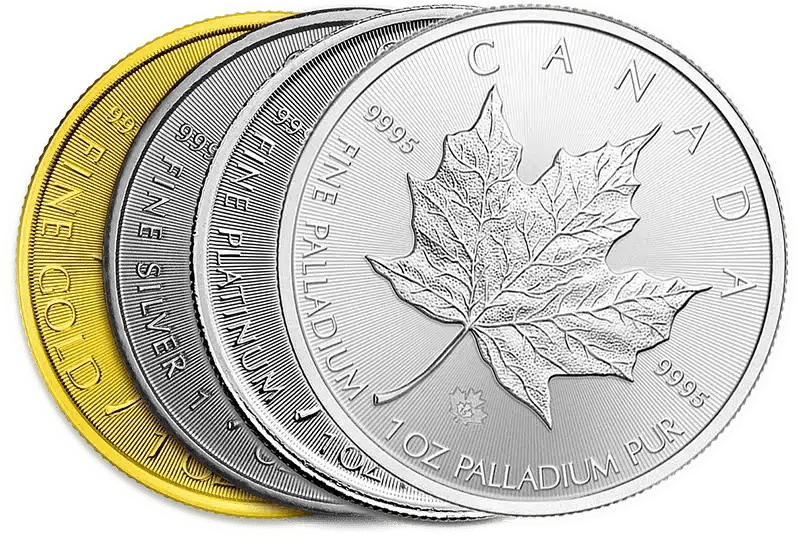
 PlatinumPalladium
Indicative prices only. The actual trading price is determined by the market rate at the time of transaction.
The Goldtresor advantage
Why can you invest in gold at unbeatable prices with Goldtresor?
The bulk of our physical inventory is held in 1 kg gold bars, so trading takes place at that price level. If you later convert into any bar or coin, you only pay the product premium at that point. You never pay a product premium while you hold a gold account balance. The same applies to silver, platinum and palladium. Because physical silver, platinum and palladium bars are stored in the Zurich free-trade zone, you never pay VAT unless you convert to physical product and take delivery.
Price formation
How is the gold price formed and what influences it short and long term?
How is the spot gold price determined?
Driven by real-time supply and demand, the gold price per troy ounce moves continuously and refreshes every fraction of a second. Because the US dollar remains the primary reserve currency, gold is quoted in dollars. On a typical trading day the price fluctuates within a half to one percent range, but a major news event can push gold several percent in minutes. Buy and sell orders are continuously aggregated to produce a mid-market price known as the spot or world-market gold price, then converted to local currencies at the prevailing exchange rate.
How is the gold price calculated in local currency?
Multiply the dollar price per ounce by the current USD exchange rate for your currency. Divide by 31.1035 for the gram price, multiply by 32.151 for the kilogram price. These figures do not include the dealer spread (premium on buy side, discount on sell side).
Try the formula
Use the slider to see how much you could gain compared to the current price if gold moves to the target you set.
per ounce
$2,400.00
per gram
$77.16
per kilogram
$77,162.40
Spread
The gold price and the investment gold spread
The spread is the gap between the buy and sell price on either side of spot. The premium is how much above spot you pay to buy; the discount is how much below spot you receive when selling. To calculate: divide the buy price by the sell price and subtract from 1. Under normal conditions the physical gold spread is relatively stable but can widen during high-impact events.
Spread calculator
Enter a buy and sell price to see the effective spread.
Right now a 100 g Münze Österreich gold bar costs $3,380.00 and you can sell it back for $3,290.00, a 2.66% spread.
View investment productsShort-term factors
Short-term factors that influence the gold price
Expectations around the Federal Reserve and other central banks move gold and most asset classes. Anticipated rate cuts tend to support the gold price, while hikes tend to weigh on it. Markets price in expected decisions well in advance; surprises amplify short-term volatility.
Historic bull markets
Gold's greatest rallies
Three periods when the gold price rose dramatically against the dollar.
from
$35
to
$850
1970-1980
24x
Following the collapse of the Bretton Woods system, amid rampant inflation, gold rose from $35 to $850 by late 1980.
Past performance does not guarantee future results. The chart is illustrative.
Long-term factors
Long-term factors that influence the gold price
Central banks hold significant gold reserves and their buying or selling programs can influence the price over years. In recent years, emerging market central banks have been net buyers, providing a steady demand floor.
Seasonal patterns
Seasonal factors in the gold market
Gold demand in China typically rises in the weeks before Chinese New Year (January/February), as gold is a traditional gift. This seasonal buying can lift prices in late Q4 and early Q1.
Summary
Gold is one of the most liquid and transparent markets in the world
The gold price is shaped by a complex interplay of short-term trading flows, central bank policy, geopolitical risk and long-term supply/demand fundamentals. Understanding these factors helps investors make informed decisions about when and how much to allocate to physical precious metals.
FAQ
Frequently asked questions about the gold price
The current global mid price of 24-carat investment gold is $154.39 per gram, which equals $4,802.00 per troy ounce. The price changes constantly, and the price table on this page refreshes every minute.
Get started