Products & Manufacturers · Chapter 6
Central Europe's Finest - The Most Important Gold Manufacturers and Their Products
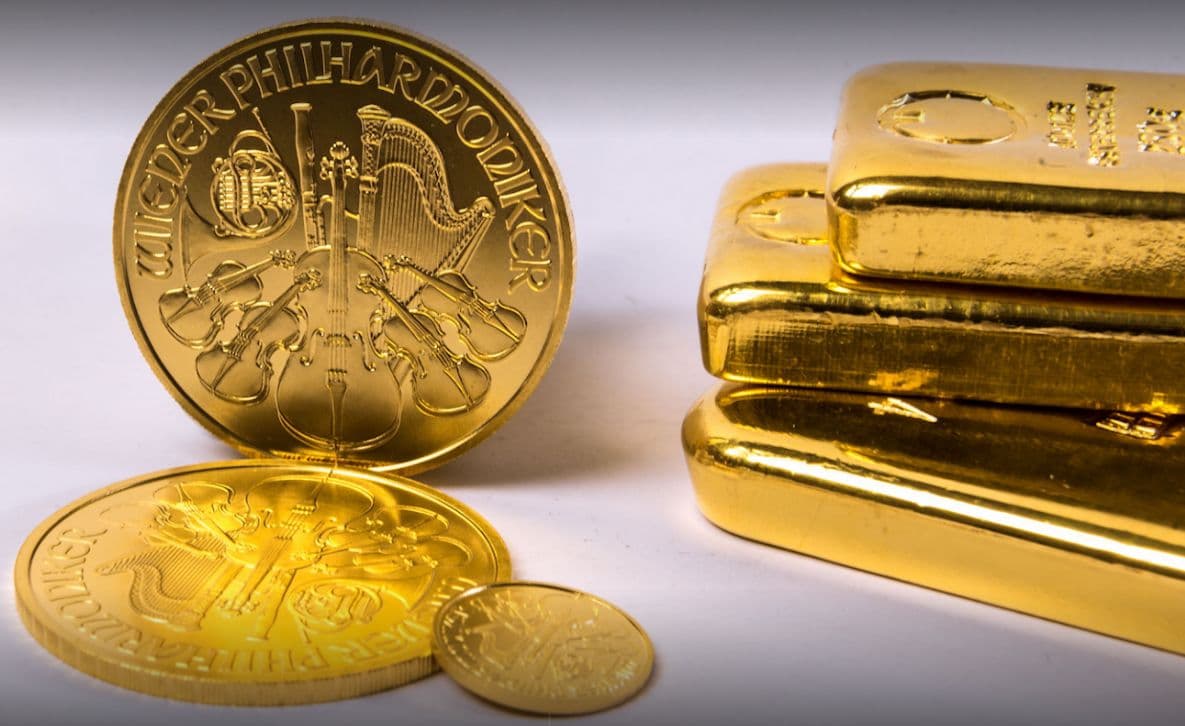
Munze Osterreich flagship products: Vienna Philharmonic investment gold coin, 250, 500 and 1,000 gram investment gold bars
In Central Europe, and Hungary in particular, Swiss and German manufacturers hold the largest market share in the investment gold bar segment.
The Swiss Argor factory and its products
The small town of Mendrisio, nestled at the foot of the Swiss Alps, is home to one of the world's largest gold bar manufacturers: the Argor-Heraeus facility. Originally a family-owned business, the company saw the Swiss bank UBS, then Commerzbank and Münze Österreich acquire ownership stakes, until in 2017 the German industrial conglomerate Heraeus bought out all shareholders, bringing the entire Argor group under its control.
Argor's own-brand product range spans the full size spectrum. The 2014 Argor catalogue listed the following investment gold bar products:
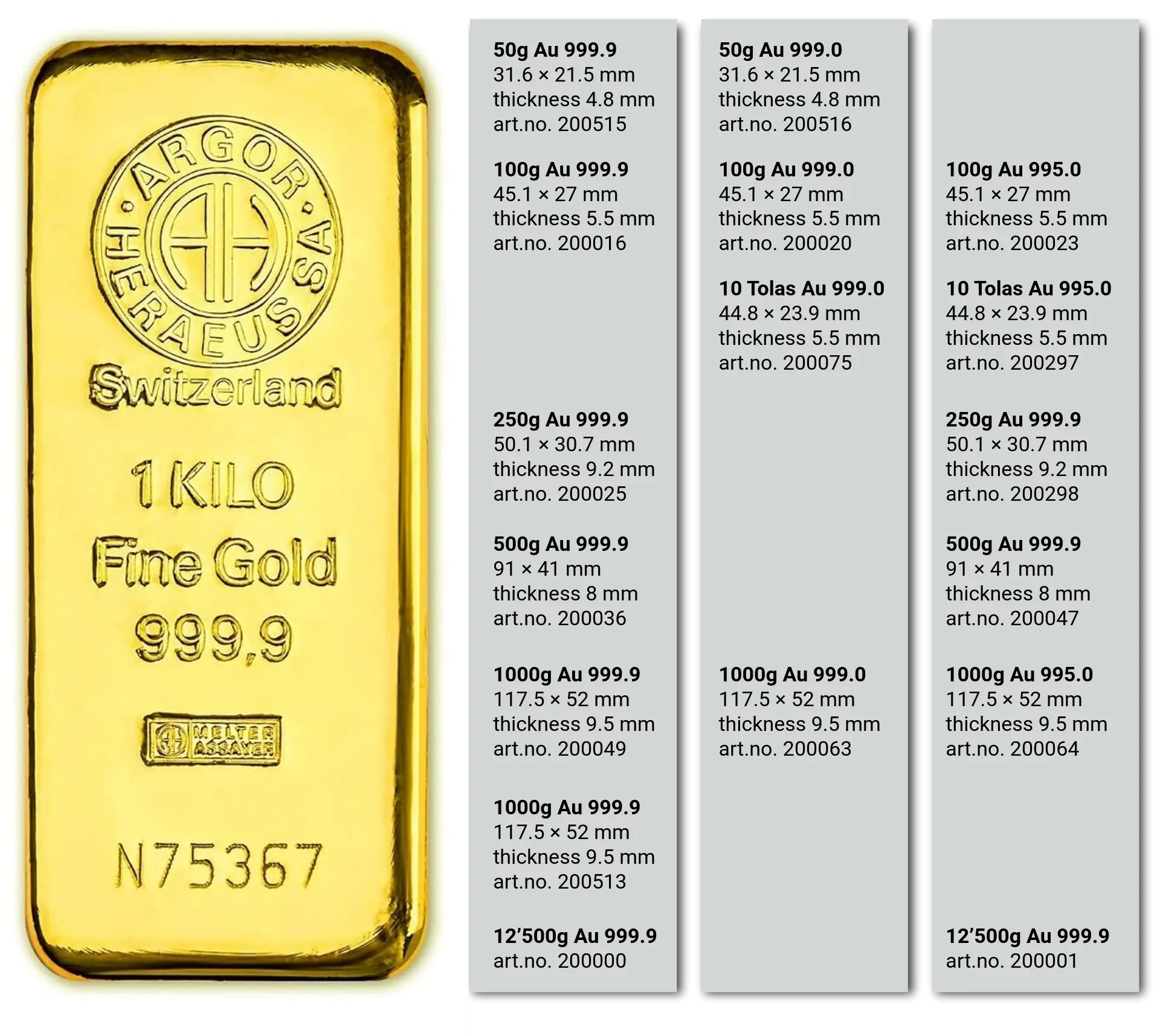
Argor gold bar specifications from 50 grams to 12,500 grams Source: Argor - Conclude Zrt.
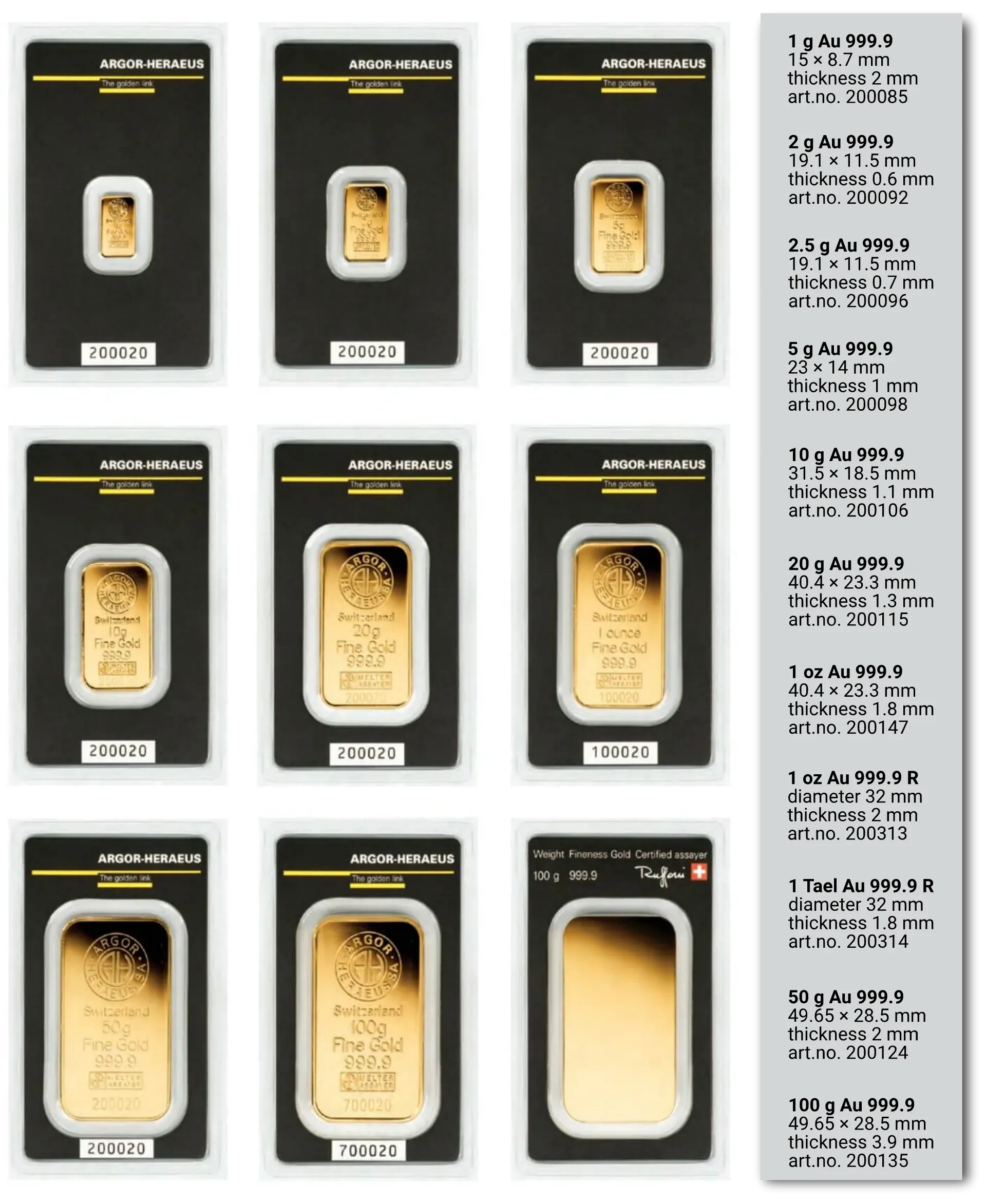
Argor gold wafer specifications from 1 gram to 100 grams Source: Argor - Conclude Zrt.
Münze Österreich gold bars - The regional market leader
In Austria and Hungary, Münze Österreich branded gold bars are the market-leading products. This is a natural consequence of the Austrian gold market's characteristics and the proximity of Vienna and Budapest. A handful of major banks, backed by the Austrian central bank, play a dominant role in the Austrian gold market. Münze Österreich branded gold wafers and gold bars can be purchased and sold at most bank branches.
Münze Österreich is one of Europe's oldest mints, a subsidiary of the Austrian central bank, and the producer of the world-renowned Vienna Philharmonic investment gold coins. However, the Austrian Mint does not manufacture gold bars itself. Instead, it commissions the Swiss Argor-Heraeus factory to produce its own-branded gold bars. Münze Österreich gold wafers and bars also bear the Argor logo, so apart from the packaging design there is practically no difference between them, as they are made on the same production line as Argor's own products.
The parent company Heraeus also has its subsidiary Argor produce gold wafers and gold bars under the Heraeus brand. In the 2 to 100 gram range, the only real difference between the wafers is the colour of the packaging.
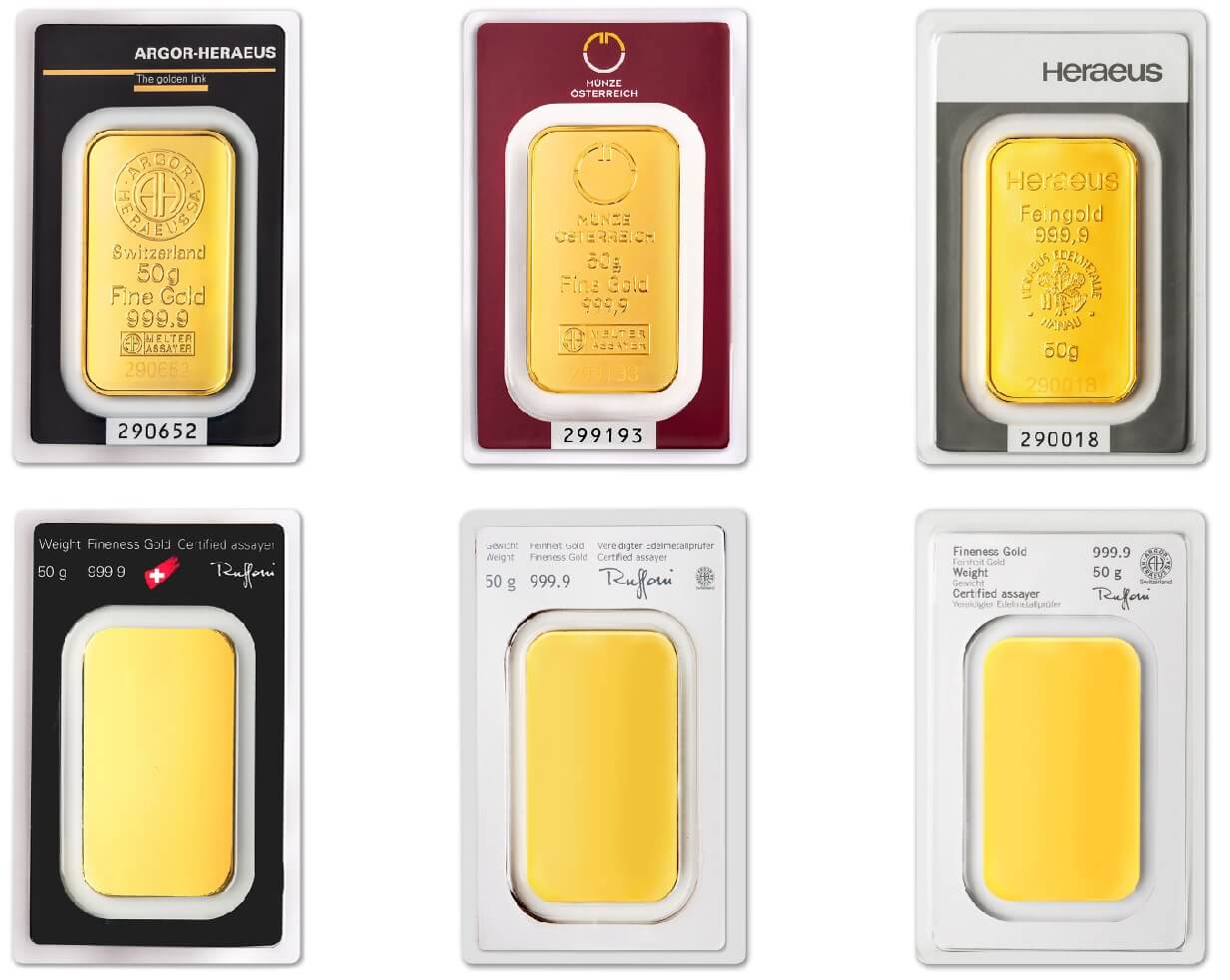
Comparison of 50-gram Argor, Münze Österreich and Heraeus gold wafers Source: Goldtresor
From the 250-gram Münze Österreich gold bars upward, however, there is an important difference: Argor and Heraeus branded bars come with a factory-issued certificate, whereas Münze Österreich branded bars do not. This makes the latter somewhat more convenient to trade and store.
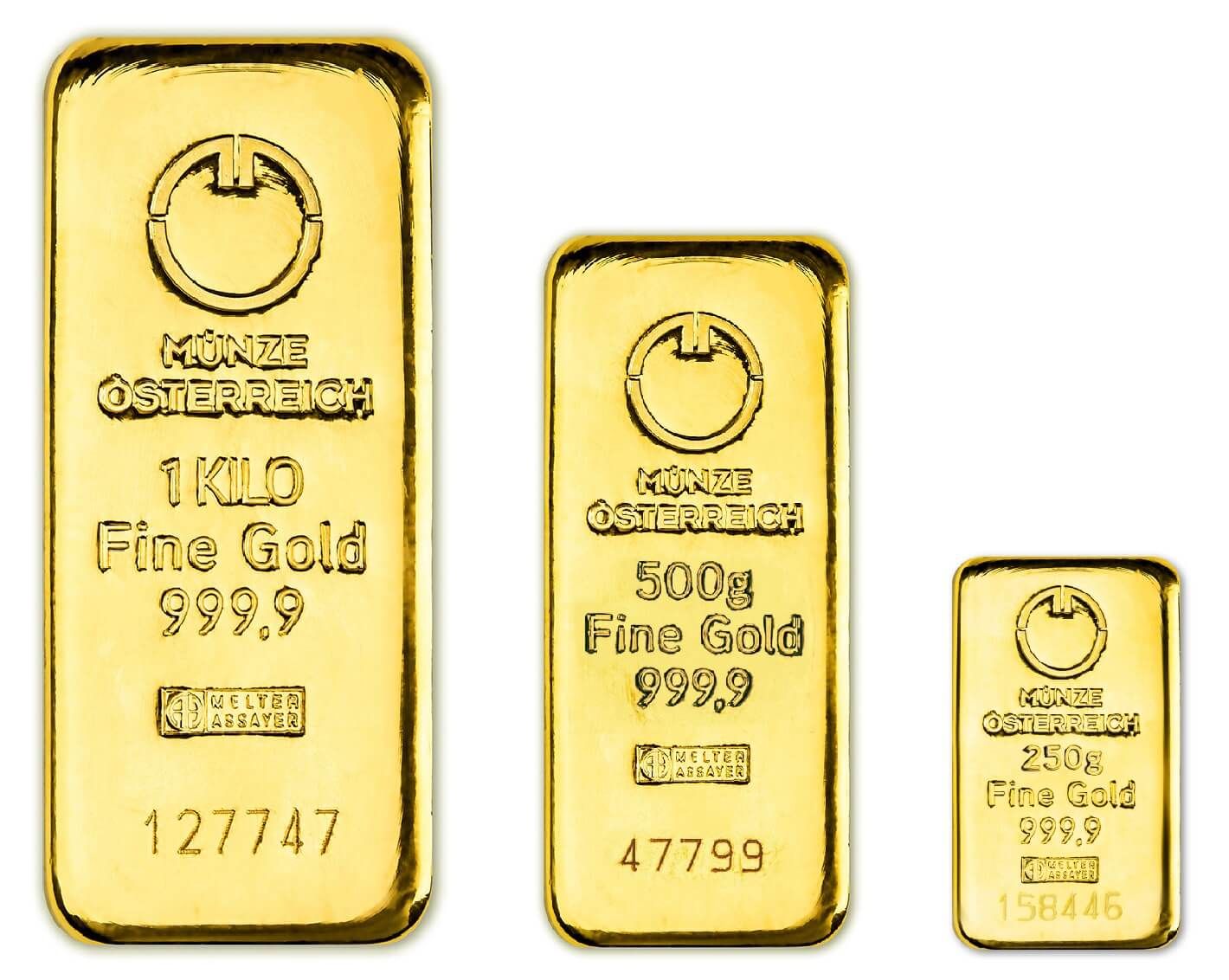
The Münze Österreich gold bar range: 250 to 1,000 gram gold ingots Source: Goldtresor
The Kinebar technology is a patent held by Argor and UBS. It is essentially a hologram applied to the surface of a gold wafer. Beyond serving as an excellent security feature, it is popular primarily because it can render distinctive decorative motifs.
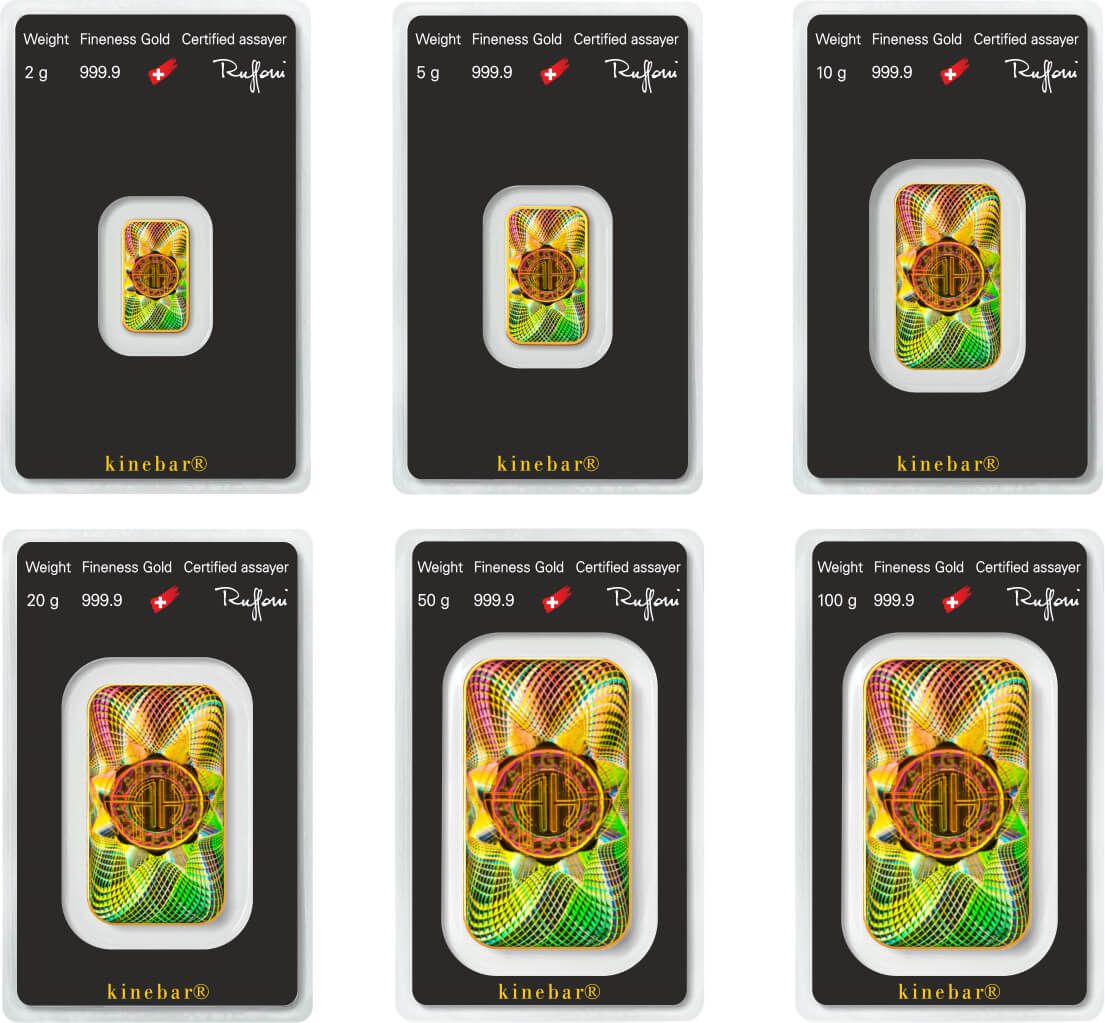
Argor gold bars with Kinebar technology Source: Argor
In the example below, the Kinebar technology serves more as surface decoration for the gold wafer, making these pieces a popular choice as fine gold gifts.
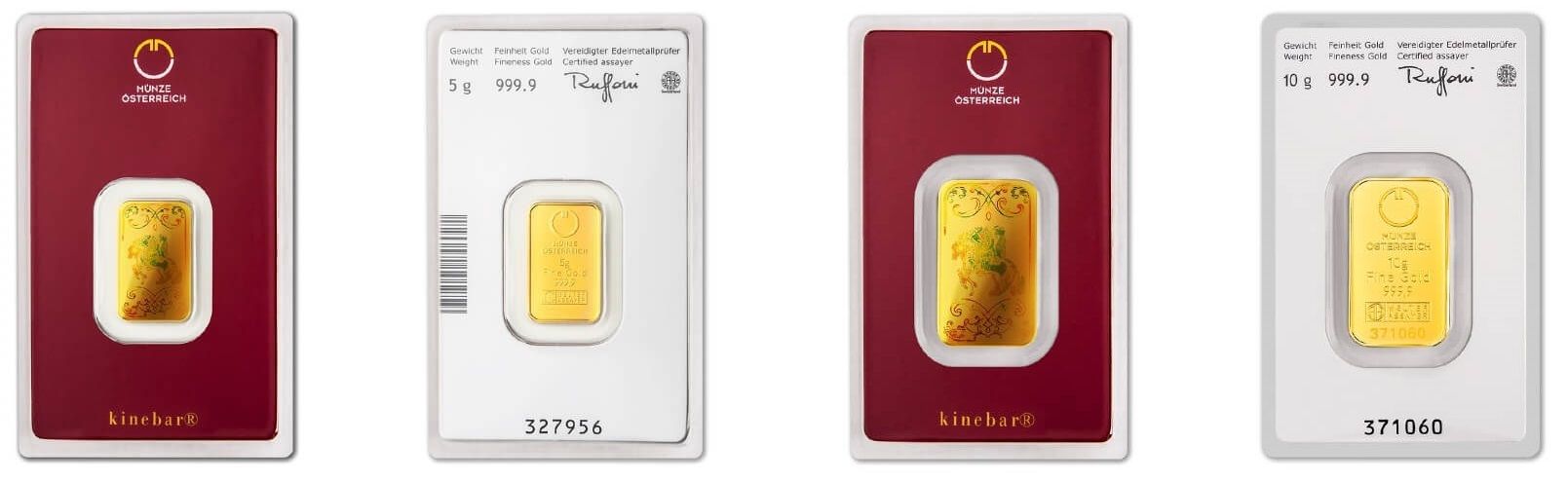
Motifs of the Vienna Spanish Riding School on Münze Österreich gold wafers produced by Argor Source: Goldtresor
Argor, Münze Österreich and Heraeus are global brands
Münze Österreich branded gold bars currently command a slightly higher price on the secondary market in the Central European region, though the difference amounts to only a few tenths of a percent compared with the other two competitors. Conversely, if an investor wished to sell a gold bar overseas or in Switzerland, for example, a slightly higher price would likely be obtained for an Argor bar. In Germany, the Heraeus gold ingot would probably fetch the best price. The difference, however, is measurable only in fractions of a percent.
We can therefore state that anyone planning to sell their gold bar in Budapest, Vienna or, say, Bratislava would be well advised to invest in Münze Österreich bars. It is important to note, however, that the gold price can move far more in a single day than the few tenths of a percent premium difference between the three bar types.
In Budapest, every gold dealer buys and sells Argor as well as Münze Österreich gold bars. Heraeus gold bars are carried by fewer dealers in the Hungarian capital.
Other popular Swiss gold bar products in Central Europe
The Valcambi (and the German ESG Edelmetall) innovation known as the "gold chocolate bar", or officially the CombiBar, is a gold bar, or rather a gold sheet, that earned its nickname because it can be broken into 1-gram units just like a chocolate bar. The surface of each individual gold gram is inscribed, making it independently tradeable. The market responded well to the idea of purchasing 50 units of 1-gram gold wafers in a single piece, since buying the same amount gram by gram would cost considerably more. This bar type was designed specifically for the eventuality of a currency crisis like those that struck Germany between the two World Wars or Hungary in 1946, when physical gold by the gram could be used to pay for goods.
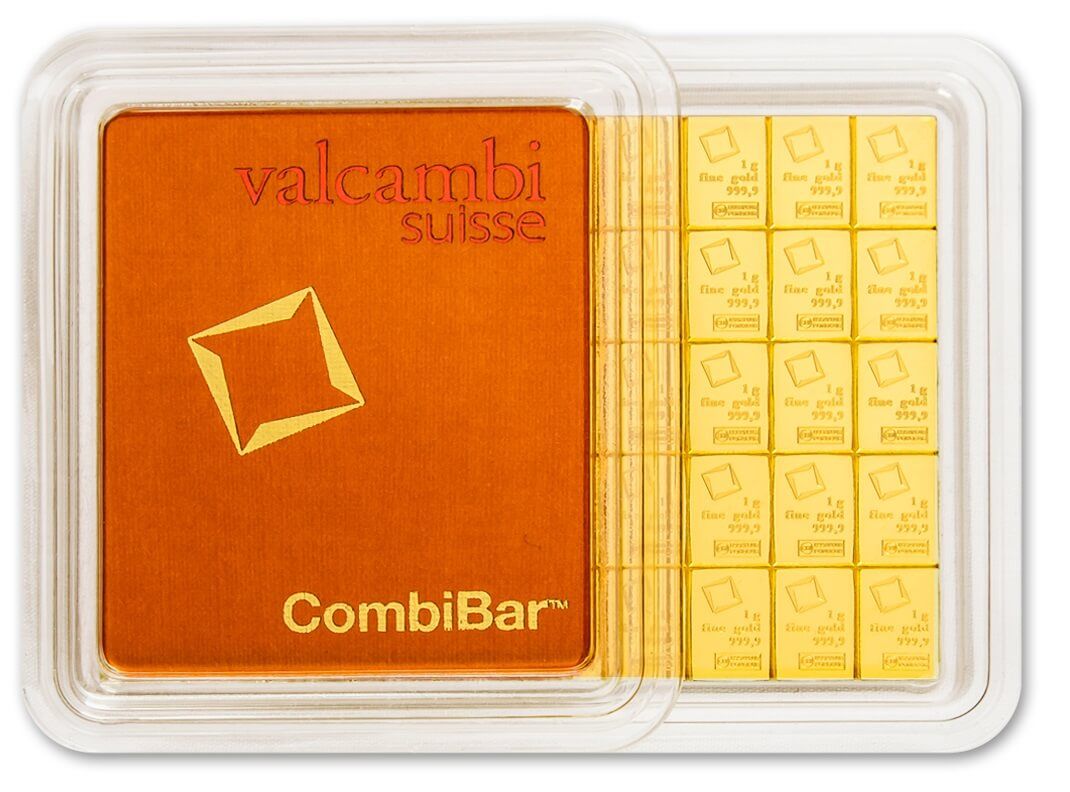
Valcambi CombiBar, popularly known as the "gold chocolate bar" Source: Conclude
Another very popular Valcambi product is the 1-ounce gold wafer, which owes its success primarily to its competitive pricing and eye-catching design.
1-ounce Valcambi gold wafer Source: Goldtresor
One of the most popular products from Pamp, the deservedly world-renowned Swiss manufacturer, is the "good luck" Fortuna wafer.
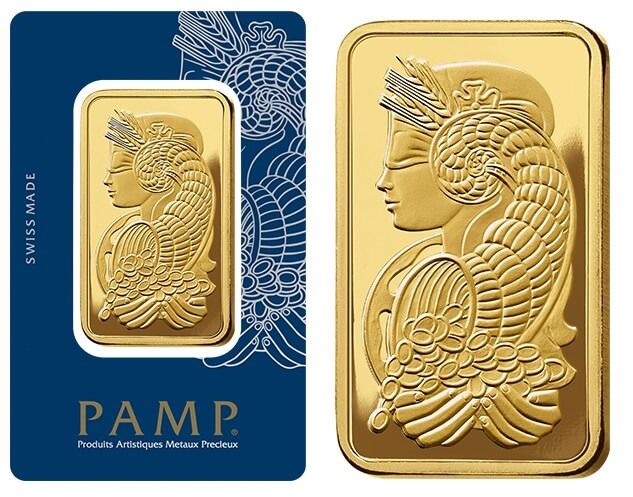
100-gram Pamp "Fortuna" gold bar Source: Pamp SA
The heavyweight: the 400-ounce Good Delivery gold ingot
Only large-scale investors and central banks typically purchase the largest gold ingots, the gold bricks familiar from films. These ingots, averaging 12.5 kg in weight and produced to the Good Delivery standard, must be individually weighed and stored with a weight list expressing their fine gold content.
The Good Delivery standard sets relatively broad weight limits (350 to 430 ounces) for the largest gold bars, but manufacturers most commonly produce 400-ounce ingots. These gold ingots are only rarely removed from the vaults.
Good Delivery 400-ounce ingots stored in London or other major gold centres also serve as collateral for gold account settlements and gold loans between wholesale dealers, refiners and central banks.
Non-standard weight gold ingots
In some countries, 100-ounce (3,110.3-gram) gold ingots are also cast. Bars denominated in other units of measurement also exist, such as bars expressed in the tola weight unit (11.6639 grams), which has been in use in India and Nepal from antiquity to the present day, or bars denominated in the Chinese tael, which weighs 37.5 grams.
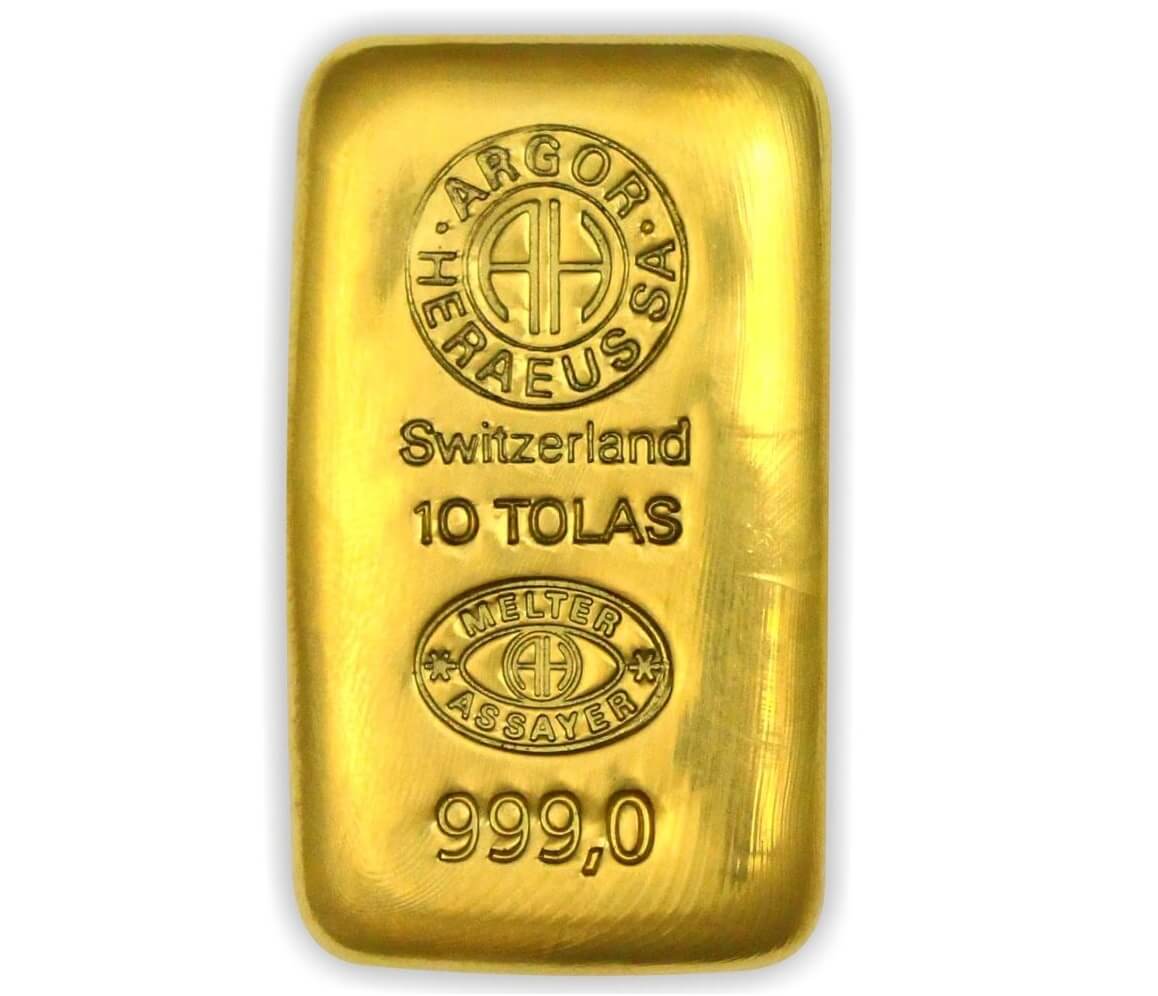
A 10-tola gold ingot manufactured by Argor Source: Argor.com
Special gold bars and gold bar collections
Since the Qing dynasty, boat-shaped Chinese gold ingots (yuanbao) have been popular. They are still purchased today as festive gifts, particularly for Chinese New Year.
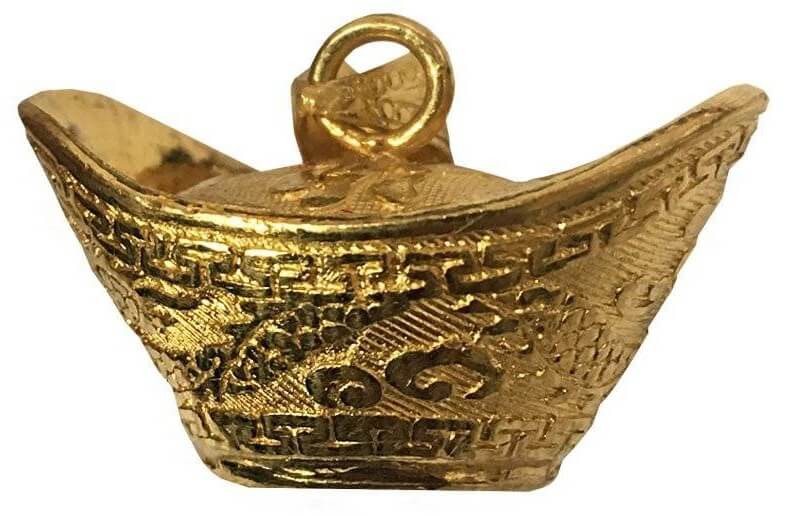
0.5-tael boat-shaped Chinese gold ingot (yuanbao) Source: Bullion exchanges
Gold bars have been cast for thousands of years, giving rise to collections that specialise in antique and industrial gold bars. The Rothschild gold bar collection is particularly famous; it was acquired in 2014 by the German firm Degussa.
Gold bars manufactured in Hungary
After 2004, Metalart produced gold bars, typically of three-nines (999) purity, on commission from the Hungarian Mint and BAV. The Hungarian Mint sold larger quantities of 1-ounce wafers featuring the Florentine florin design, while BAV marketed gold bars bearing the likenesses of Hungarian historical figures (for example, 50-gram and 100-gram gold bars depicting King Matthias). Not only rectangular but also triangular half-ounce and one-ounce gold wafers were produced at Metalart, with the largest being the 1,000-gram gold bar. These are no longer manufactured and can only be found, with increasing rarity, on the secondary market. Their price tends to hover at or slightly below the world market gold price. They are typically purchased by goldsmiths for jewellery production. It would be well worth assembling a collection of these sometimes strikingly beautiful gold products before they are melted down for good.